


TIRANA – Problems of bribery, misuse of office, excessive use of force and passive professional behavior negatively affect the police integrity in Albania.
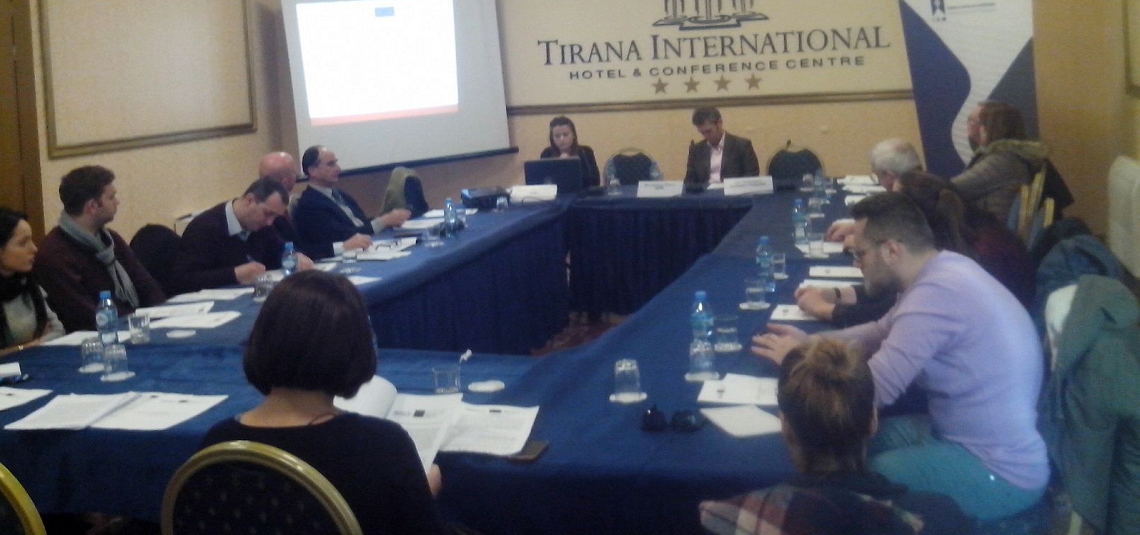
The Institute for Democracy and Mediation (IDM) organized the presentation of the research “Assessment of Police Integrity in Albania” at the Hotel Tirana International on 13 of December 2016. This event gathered together representatives of the independent institutions, international community, civil society and media representatives. The goal of the research is to provide an objective and comprehensive view on police integrity in Albania.
Weak Police Oversight
Besjana Kuçi, a researcher at the IDM, indicated that the application of the control mechanisms with regard to police work is sporadic and the impact of the conclusions and recommendations of the committees of the Assembly are scarce.
“In total in 2016 the standing committees held four hearing sessions with the Minister of Interior and one hearing session with the Director of State Police. With regard to police oversight for the period 2014-2016, only three inquiry committees were established at the request of the opposition group”, said Kuçi.
In relation to the other independent oversight bodies, they are generally understaffed and under-resourced and at times lack the necessary expertise to properly oversee the police work.
“This is evident when new responsibilities are attributed without additional budgetary support”, Kuçi underlines.
Arjan Dyrmishi, a senior expert at the IDM, pointed out the role of the Parliament as the main authority mandated to ensure oversight of the State Police work, but for years now this role was not fulfilled.
Lack of Financial Transparency
State Police in Albania represents the largest budget program of the Ministry of Interior, and funds allocated for this program amount to 74% of the approved budget for the institution in 2016.
“There is a lack of transparency in regard to budget execution. Regular reports are not a practice of State Police”, Kuçi noted.
The second issue is social nature of the police budget.
“About 77% of budgetary funds allocated in 2016 for Ministry of Interior are planned to be spent for salaries and social and health security of employees of the State Police. Personnel costs account for about 96% of actual expenditure, while capital expenditures represent a very low-value realization, in only 4% of expenses”, explained Dyrmishi.
Public procurement has always over the last years led to heated debates and allegations between political parties, during and after the procurement processes.
“Part of the criticism has been mainly about the procurement processes, the budget required, the selection of the contractors and also the quality of the products/services purchased”, said Dyrmishi.
Moreover, Kuçi emphasized that the technical specifications together with the contract management remained one of the most difficult topics with regard to the capacities of the State Police.
Minor Disciplinary Measures for Violation of Human Rights
Representatives of the Albanian Helsinki Committee pointed out at the event that disproportionate use of force was observed mainly at the moment of arrest. Allegations of violations have been made also regarding the interrogation process, or during accompaniment to the police premises. The lack of proper training was considered to be one of the main causes reported by this organization.
“29 cases of human rights violations (violence, illegal accompaniment, discrimination) by police officers were investigated. In most cases, 24 out of 29 cases it was recommended a minor disciplinary measure”, explained Kuçi.
Building Integrity through One-Stop-Shops
There are some positive measures that have been taken aiming to build the integrity of the State police.
“Some of the measures are related to public transparency and improvement of police services include the establishment of one-stop-shops at the police commissariats, the installation of cameras to mobile police patrols and body cameras for the sector of traffic control to reduce petty corruption, as well as the introduction of new channels for the citizens to report corruption or file complaints on police misconduct”, Kuçi concluded.
Civil society organizations
dedicated to oversight of police integrity.