


PODGORICA — Six out of ten Montenegrin citizens trust the police. However, most of the citizens at the same time believe that the corruption within this institution is relatively widespread, according to the results of a public opinion survey that were presented today.
Institute Alternative (IA) presented the public opinion poll results conducted on a representative sample of 1.000 adult citizens of Montenegro.
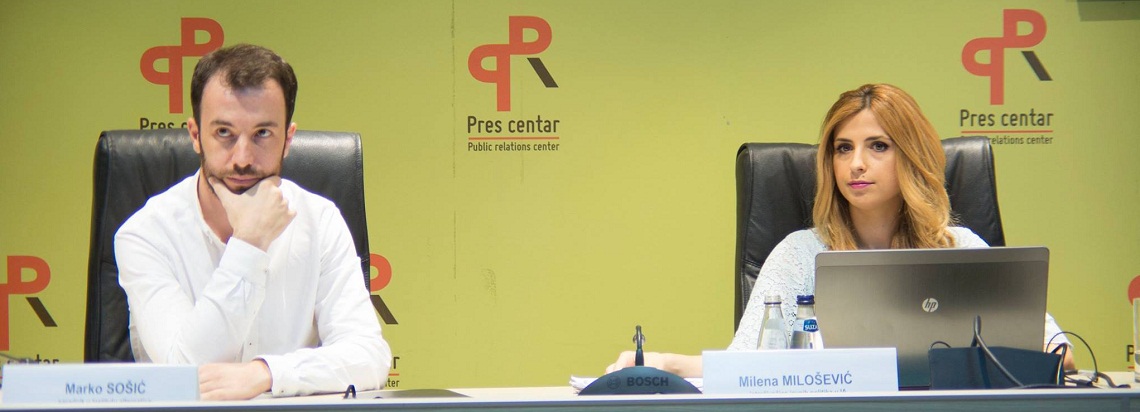
“In addition to the high level of trust, citizens predominantly have positive associations when it comes to regular police officers, both male and female,” said Milena Milošević, researcher at IA and a panelist at the presentation. However, she also pointed out that these positive results are to some extent contrary to other findings of the conducted research, which gives a somewhat complex idea of the citizens’ perception of police.
For instance, citizens think that the corruption is widespread within this institution and that police is mostly serving certain particular interests. In popular opinion, the employment within the police is not based on merit. Namely, 36% of citizens think that corruption is somewhat spread, whereas over 19% feel that it is spread to a largest extent. Only 13% of the citizens think that police is almost corruption free.
Perception of corruption in the police is one of the most stable findings in this year’s research when compared to the one conducted in 2015.
Citizens of Serbian ethnic background have less trust in the police and see it as predominantly detached from the citizens. Less than half of the respondents (42%) of those who identify as Serbs say that they have complete or almost complete trust in this institution.
A new addition in this year’s research was a focus on different perceptions of policemen and policewomen.
“Although policewomen are usually attributed with positive traits, this research confirms the existence of certain stereotypes about women. Beauty, looks and charm are among the most common associations when it comes to policewomen, whereas less than 1% of respondents have the same associations regarding average policemen. In addition, none of the respondents consider policemen unfit for their duty, whereas 5% stated this as their first association when it comes to describing policewomen,” said Milošević.
She also pointed out that, even when other institutions come under scrutiny, the results on citizen trust and perception of corruption do not add up.
“For example, healthcare also enjoys higher levels of trust, while at the same time citizens think that corruption in this system is also relatively widespread,” she added, pointing to the insufficiently developed political culture of questioning the work of institutions in charge, as one of the possible explanations for these contradictory results.
Marko Sošić, associate at IA, stated that this public opinion poll, based solely on the perceptions of citizens, will be complemented by deep qualitative research of police integrity that will be presented in a separate publication in December 2015.
The survey was conducted in April 2016 on the sample of 6,000 respondents in Serbia, Kosovo, Albania, Bosnia and Herzegovina, Montenegro and Macedonia within the regional poll conducted by the civil society network POINTPULSE, with the field work conducted by IPSOS Strategic Marketing. More information regarding the research methodology can be found here, whereas the questionnaire is available here.
Civil society organizations
dedicated to oversight of police integrity.