

BALKANS — The research conducted within the framework of the project “Western Balkans Pulse for Police Integrity and Trust” led to an incredible finding: 96% of Serbian citizens consider police to be corrupt, whereas a large majority (82%) think that political parties have influence on police work.
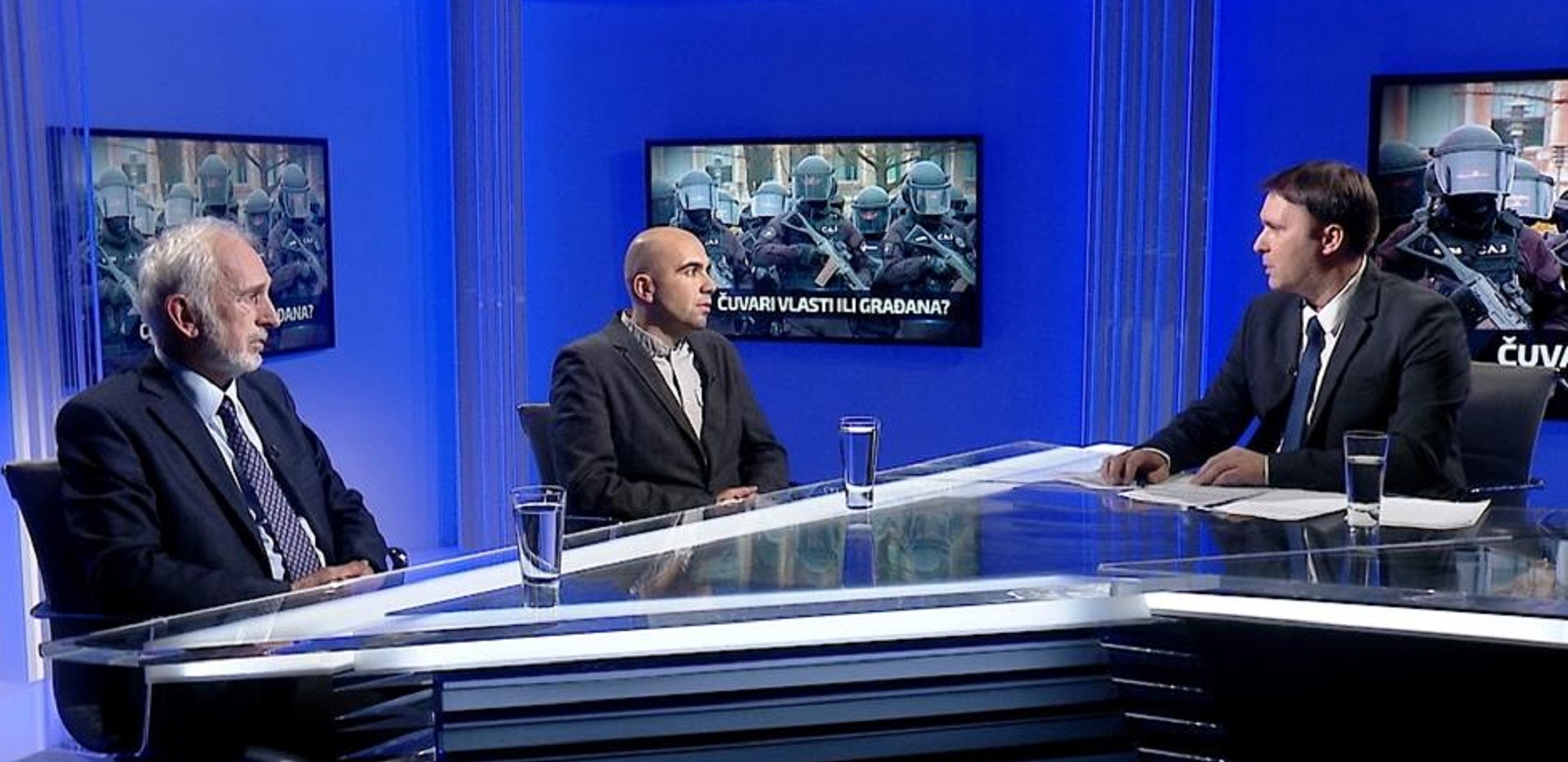
A special feature story run by a regional television network, N1 Info channel, made an attempt at providing the answers about the extent to which the police work is influenced by politics. The TV feature story was made in cooperation with the journalists working with the Balkan Investigative Reporting Network (BIRN) in Bosnia and Herzegovina, Serbia, Montenegro and Kosovo.
According to the research results of the “Western Balkans Pulse for Police Integrity and Trust” network, a predominant majority of citizens think that their national police forces are corrupt. In their communication with BIRN, experts state that this particular opinion is prevalent because of the everyday contact with police officers, which is the reason why the citizens usually perceive them as uneducated, arrogant and inconsiderate. There are, however, other reasons for this situation, including a number of affairs that surfaced from the Serbian Ministry of Interior. These include, among other, the last year’s dismissal of five heads of police directorates within the Serbian police, still with no explanations as to the reasons for this action.
The police work has been marked with numerous affairs for years now, almost exclusively with no epilogues, which points to the fact that the police are being instrumentalised by politics. One of the most prominent recent affairs came into existence when the Serbian Ombudsman, Sasa Jankovic, submitted requests to the MoI and the Ministry of Defence for accessing the documentation pertaining to the last year’s intervention by the Gendarmerie during the Pride Parade in Belgrade. On this occasion Andrej Vucic, brother of the Serbian Prime Minister Aleksandar Vucic, was physically attacked and beaten by the Gendarmerie. Instead of receiving the requested documentation, the Ombudsman faced an affair.
The last few months were particularly problematic, since the affairs were appearing one after other. The accusations of illegal wiretapping, racketeering foreign investors, determining the truth in polygraph tests which have no forensic value, all the way to the “weekend TV show programme” about the coup d’état and the press conference of the minister of interior with fully equipped and armed special police forces standing in the background. The culmination of deceiving the public and dragging the police into the sphere of politics took place when the minister of interior announced that the police are going to withdraw criminal charges against the owner of the Kurir daily, Aleksandar Rodic, although the minister concluded that this action does not imply that Rodic is not guilty for the crimes he was originally accused for.
All this, experts agree in their conversation with BIRN, are the reasons behind the fact that only 27% of respondents see the police as a service to the citizens. The only cure for this problem is a comprehensive reform of the police, which also includes decentralisation. Apart from depoliticisation and establishing and adequate internal control system, one of the recommendations from the POINTPULSE project is the need to increase transparency.
Transparency yet remains to be achieved, taking into account that the retirement or dismissal of the Serbian Head of Police, Milorad Veljovic, was announced a few days ago in the media. Minister Stefanovic did not wish to confirm or deny these speculations, only stating briefly that the public will be informed in the upcoming days.

The Professor at the Law Faculty of the Union University, Bogoljub Milosavljevic, as a guest speaker in the special feature story on N1, claims that the position of the Head of Police failed to deliver on its promises of delineating the work of police from that of the ministry, despite initial expectations. Milosavljevic reminded that Veljovic is the first Head of Police in Serbia and that he received support by all the ministers of interior, despite the fact that the police service itself did not see major improvements. Milosavljevic considers that the Head of Police, if the new Law on Police introduces adequate provisions, should have a clearer role that would actually place them in charge of the police, instead of the minister who is a political figure.
However, he claims that the influence of politics on the appointment of the Head of Police is obvious. This is also one of the reasons for having a number of top-ranking positions within police without appointments for a long period of time, because politics seeks people who are loyal to it.

Sasa Djordjevic, from the Belgrade Centre for Security Policy, says that from 2001 and onwards basically the same debate exists in the public. Namely, politicians always send the same message that the police should be a service to the citizens, but the goals set 15 years ago (depoliticising, decentralising and demilitarising the police) are still long way from being achieved. The legal framework seems not to explain the problem completely, since there are some good legal solutions that are being neglected in practice. When the laws are not being implemented, all the reforms fall apart, claims Djordjevic.
He also discussed the non-transparent process of dismissals of police officers. The whole process took place behind the closed door, out of the public’s eye and with only minimal information disseminated to the public. Djordjevic points that it is important to know the criteria that were used for the transfers and dismissals of police officers. When the whole process is clouded in the veil of secrecy a question must be raised as to who is making these lists and with what purpose.
Professor Milisavljevic claims that the fact that a number of people should leave the MoI is not an issue, but these redundancies should be made among the non-police staff. In addition, there exists a number of police officers who do not merit to remain in service on many grounds, so the criterion for the dismissals due to redundancies should be the work results.
Milosavljevic further reminded that even after the action “Sabre (Sablja)” and the change of Government that ensued, 28 heads of police directorates were dismissed from the service. This is the exact moment when the start of deprofessionalisation of police can be pinpointed. Djordjevic also added that the affair about the Ombudsman and the so-called coup d’état are the classical examples of instrumentalisation of the police for various political purposes.
Watch TV show on YouTube (only in Serbian)
Civil society organizations
dedicated to oversight of police integrity.