


PRISHTINA – The KCSS address the key problems and challenges of keeping the Kosovo Police accountable, honest and ethical. Politicization is the most sensitive issue.
By Plator Avdiu (KCSS)
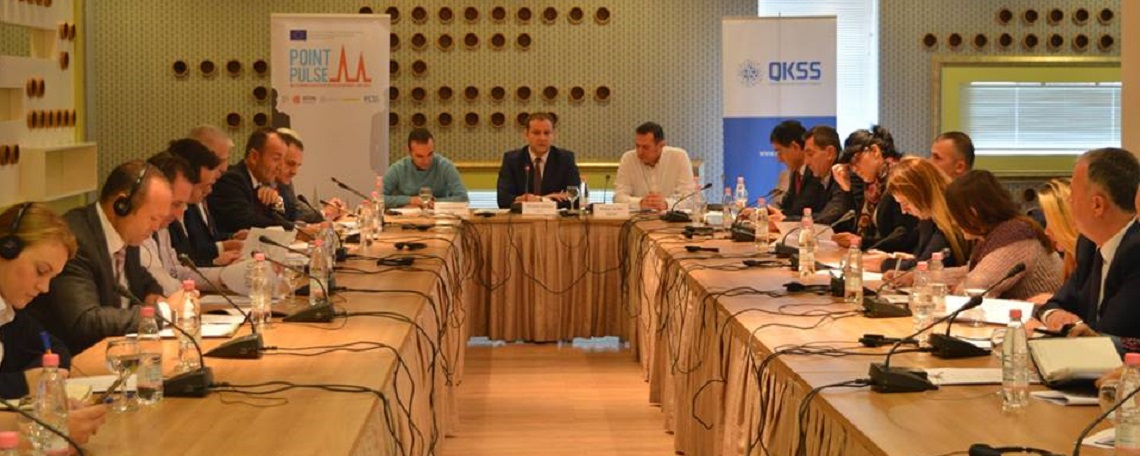
On 26th November 2015, the Kosovar Centre for Security Studies launched and presented the country report “Assessment of Police Integrity in Kosovo”, in the framework of activities of POINTPULSE’s network. This report aims to assess the integrity within the Kosovo Police.
In relation to transparency, the citizens and media in Kosovo perceive the Kosovo Police as a sufficiently transparent institution. However, there should be far less bureaucracy when it comes to access statistics, data and detailed information about the police work. Therefore, the Kosovo Police should be more proactive to ensure its timely transparency concerning the requests from media, non-governmental organizations and other relevant parties.

Politicization as the most sensitive issue
About the influence of political interests on the operational work of the Kosovo Police, “the research has found that this area remains the most sensitive”, stated Plator Avdiu, a researcher of KCSS.
The current legal framework does not guarantee full operational independence from the Kosovo Government and the Ministry of Internal Affairs. While, senior management of the police is politically elected by the Minister of Internal Affairs and the Prime Minister. In addition, the police is accused of having been under political pressure during the 2015 opposition protests against the Government.
“There have been cases when the Minister of Internal Affairs has commented on the police actions, which indirectly implies the influence of politics towards the internal issues of the police. When it comes to the public perception, the majority of the Kosovo citizens believe that the political influence on the police is very strong”, said Avdiu.
The problem of early retirement
The biggest challenges within the human resources management of the police are the early retirement of police officers as well as recruitment of new police officers.
The Kosovo Police is considered among the ‘oldest’ police forces in the region and should therefore be reformed. The Draft law on Early Retirement of Police Officers, which has not yet been enacted, foresees that the retirement age of police officers will be 55. In this regard, approximately 1,000 police officers will retire, and new police officers will be selected and recruited.
“There is a risk of nepotism during the recruitment of new police officers and this process should be conducted very strictly by the police and reviewed by the relevant oversight institutions.

It’s necessary to improve capacities of procurement unit
The biggest challenges in the public procurement sector of the Kosovo Police are the lack of professional staff in the procurement unit. It also lacks the personnel in general to supervise the implementation of contracts entered into with various private economic operators concerning capital investments and services required by the police.
There is a need that the relevant institutions to revise the Law on Public Procurement to include a specific provision that will regulate the security and defense sector in Kosovo, because of its sensitivity.
During 2015, the Police Inspectorate of Kosovo is being investigated in relation to three big tenders involving the purchase of equipment and uniforms for police officers, building the police shooting range and a K9 facility for the police.
It is important to strengthen internal control and external oversight
As to the internal control mechanisms of the police, further progress is needed to strengthen the integrity policy and define it even better. Furthermore, the Kosovo Police does not have its own integrity plan, and there should be integrity tests to assess the performance of police officers. Despite this, every year the police performs a performance assessment of police officers through a questionnaire related to the daily work of each officer.
The Police Inspectorate of Kosovo, an independent agency from the police and operating within the Ministry of Internal Affairs, has not been able to provide integrity tests for police officers. Furthermore, the Police Inspectorate needs to enhance its human and professional capacities.
Concerning the supervision of the police activities, the parliamentary oversight is still weak. According to KCSS’ researcher, Skender Perteshi, the relevant Committee of the Assembly on Internal Affairs has been insufficient to supervise the implementation of the Law on Police and other related activities of the Kosovo Police in the years 2014 and 2015.
“The Committee does not have internal resources including experts to exercise professional supervision towards the Kosovo Police. Even more, the Members of the Committee does not have the necessary background in the security and internal affairs areas to oversee the police”, said Perteshi.
This public event was attended by more than 20 participants, including representatives from the Kosovo Police, Ministry of Internal Affairs, Members of the Assembly of Kosovo, experts of the security area, civil society organizations, academia as well as media. Participants constructively contributed to the conference with their discussion on police integrity in Kosovo.
Progress and regress in relation to police integrity is measured through six sections or indicators: the transparency of police work, the influence of political interests on the operational work of the police, human resources management, financial management, internal control and external oversight of police work.
Civil society organizations
dedicated to oversight of police integrity.